The best CRM for construction depends on where your business loses money. If jobs slip away because calls go to voicemail and estimates never get a follow-up, GoHighLevel is the best-value fix at a flat $97/month. If the pain is job costing, crew schedules and change orders, you need construction-specific software like JobNimbus, Buildertrend or Procore, and a marketing CRM won’t help.
Most contractors shop for “construction CRM software” without separating those two problems. One kind of tool catches an inbound call, texts the lead back, books the estimate and chases the homeowner who went quiet. The other kind schedules crews, tracks change orders and runs job costing from signed contract to final walkthrough. Buy the wrong one and you either pay for production features you never touch or keep losing jobs to faster competitors.
What CRM software for construction companies does
A construction CRM (customer relationship management system) tracks every lead, bid and client relationship before and after the contract: who called, what they need, whether an estimate went out, who followed up and how the job ended. For construction companies the sales cycle runs from inquiry to site visit to estimate to signed contract, sometimes over weeks, and the CRM keeps each deal moving so nothing falls through during a busy week.
Construction management software takes over once the contract is signed. It handles scheduling, subcontractors, budgets, change orders, permits and documents. Some platforms blend CRM and project management. GoHighLevel stays on the front end, which keeps it simpler but means it can’t follow the job onto construction sites.
Construction CRM software by trade
The right construction CRM changes with your side of the construction industry. A residential roofer running storm-damage leads has little in common with a commercial general contractor bidding a $4 million build.
High-volume residential and specialty trades (roofing, remodeling, HVAC, plumbing, electrical, painting, restoration) live on inbound volume: web forms, paid ads, referral apps and phone calls that need an answer in minutes. Their CRM problem is speed and follow-up across dozens or hundreds of leads a month.
Commercial construction firms and larger subs run a different cycle: bid invitations, plan review, RFIs, proposal comparisons and a handful of large deals worth negotiating carefully. Their CRM problem is tracking a bid pipeline, relationships with general contractors and win rates, not lead-response speed.
GoHighLevel is built for the first group, and it’s one of the better CRM tools for contractors who compete on speed. A small construction business without a dedicated office manager usually falls into that group too, because nobody on a three-person crew has time to chase leads by hand.
Best construction CRM software compared
Here’s how the main options stack up for small to mid-sized construction firms. Prices were checked in October 2026.
| Software | Type | Pricing | Best fit |
|---|---|---|---|
| GoHighLevel | Marketing and sales CRM | $97/mo flat, unlimited users | Residential trades that need fast lead response, follow-up and reviews |
| JobNimbus | Contractor CRM and job management | Quote-based; plans from Essentials (up to 3 users) to Enterprise | Roofers and exterior contractors wanting CRM and project management in one tool |
| Buildertrend | Construction management platform | Quote-based | Remodelers and home builders managing schedules, budgets and client portals |
| Pipeline CRM | Bid and sales pipeline CRM | $25/user/mo annual ($29 monthly) | Commercial contractors and subs tracking bids and GC relationships |
| Procore | Construction management platform | Annual fee based on construction volume, unlimited users | Mid-size and larger GCs managing complex construction projects |
| HubSpot CRM / Zoho CRM | General CRM | HubSpot Starter $20/seat ($15 annual); Zoho Standard $14/user annual | Firms that want a generic CRM and will customize it themselves |
GoHighLevel: best for residential lead response
GoHighLevel earns its place in the gap between “someone needs work done” and “someone signs a contract,” which is where most missed revenue lives.
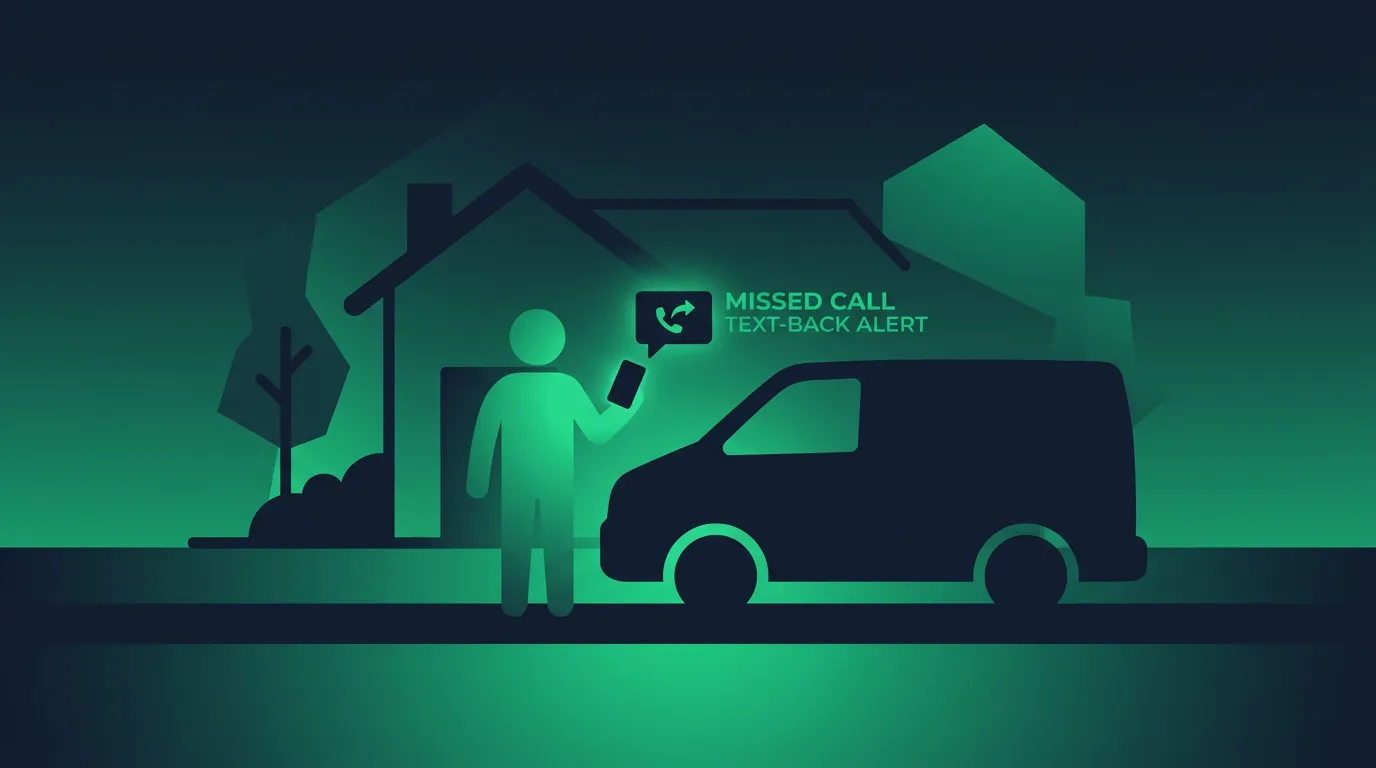
Missed Call Text Back justifies the subscription for a lot of trades on its own. A crew member on a roof or driving between jobs can’t answer every call, and a voicemail that waits six hours for a callback is a lead a competitor already booked. GoHighLevel texts the caller within seconds, so the conversation stays open.
Behind that, multi-step workflows text and email a homeowner who requested a quote late at night, follow up the next morning if they haven’t booked, and send a reminder the day before the estimate so someone is home when the truck arrives. Booking calendars let homeowners pick an estimate slot online. Conversation AI and Voice AI can qualify after-hours inquiries, but they’re billed per use unless the account is on an AI Employee plan ($50 or $97 per month per sub-account).
The quote stage stays in the same account too. HighLevel’s Invoices & Estimates and Documents & Contracts features send estimates and contracts for e-signature, and a signed document can generate an invoice automatically. That covers simple residential quotes. It won’t do plan takeoffs or line-item cost estimating from drawings.
Reputation management matters more for contractors than for almost any other industry, because “roofer near me” searches lean heavily on review count and rating. Automated review requests sent right after a job wraps build that visibility over time.
The mobile app puts missed-call alerts and the pipeline in an office manager’s or owner’s pocket, so a lead can be answered from the truck. Like any cloud CRM platform it needs a signal, so it’s less useful in a basement or on a rural site with no coverage.
JobNimbus
JobNimbus combines a contractor CRM with job boards, scheduling, estimates and invoicing, and it’s especially common with roofing and exterior contractors. It doesn’t publish prices. Plans run from Essentials (up to 3 users) through Pro, Premium and Enterprise (20+ users), quoted by users and add-ons, with a 14-day free trial and no long-term contract required. It’s the natural choice for a roofer who wants one system from lead to final invoice and can live with lighter marketing automation than GoHighLevel offers.
Buildertrend
Buildertrend is construction management software for home builders and remodelers: schedules, budgets, change orders, client portals and selections, plus a lead-tracking module. Pricing is quote-based, and third-party reviews in 2026 report plans in the hundreds of dollars per month and up. It’s the stronger pick when the build itself is the bottleneck rather than the lead flow.
Pipeline CRM
Pipeline CRM is a sales pipeline CRM popular with commercial contractors and building-product suppliers. It’s built to track bids, estimates and relationships with general contractors. Start costs $25 per user per month billed annually ($29 monthly), Develop $33, Grow $49, with a 14-day free trial. For a commercial sub with three estimators chasing bid invitations, it’s a better fit than GoHighLevel.
Procore
Procore is the heavyweight construction management platform. It doesn’t publish per-user pricing. Customers pay an annual fee by product, based on annual construction volume, and every contract includes unlimited users. That model suits mid-size and large GCs. A small residential contractor will find it more platform than it needs.
HubSpot CRM and Zoho CRM
General CRMs like HubSpot CRM, Zoho CRM, Salesforce and Pipedrive appear in every roundup. HubSpot’s Free CRM covers two users and Starter costs $20 per seat per month ($15 billed annually). Zoho CRM is free for three users, with Standard at $14 per user per month billed annually. Both are a solid CRM solution for tracking contacts and deals, but neither was designed around construction sales cycles, so you’ll spend time customizing pipelines and fields that a construction-specific CRM ships with.
Essential CRM features for construction companies
Whatever you shortlist, check it against the features that matter for managing construction leads:
- Lead capture from every channel: calls, web forms, ads and referral apps landing in one pipeline.
- Speed-to-lead automation: instant text or email replies and alerts to whoever is on call.
- A visible pipeline with stages from inquiry to site visit, estimate sent, signed and complete.
- Estimates and e-signature, or a clean hand-off to the tool that builds your proposals.
- A mobile app that field crews and estimators will actually use.
- Integration with construction and accounting software, so job details pass to your production system without retyping.
- Reporting that shows which marketing channel produces booked jobs, not just form fills.
GoHighLevel covers the first five well. Construction-specific CRMs cover the production hand-off better.
Where GoHighLevel stops
Once a contract is signed, GoHighLevel has little left to offer. It has no job budget, change orders, punch lists or crew schedule. It can’t run job costing against actuals, build a permit checklist or coordinate which subcontractor shows up on which day. Bolting that onto custom fields falls apart as soon as a project has more than a few moving pieces.
That’s why many contractors run two systems: GoHighLevel for intake, estimates, follow-up and reviews, and JobNimbus, Buildertrend or ServiceTitan for the build. Hand the job across cleanly through Zapier, Make or a native integration where one exists. Retyping job details between systems is where scope notes and site-access instructions get lost.
Plan accounting separately. Job costing belongs in QuickBooks or your construction platform, and sources disagree on whether GoHighLevel’s QuickBooks connection is native or Zapier-based, so check before you count on invoices syncing.
How to choose the best CRM for your construction business
Start by counting monthly inquiries across every channel: phone, web form, referral app and walk-up. If you see under fifteen a month and most come from referrals, a marketing CRM solves a problem you don’t have yet. Above thirty, especially from paid ads, storm work or a busy website, automating the response layer usually pays for itself.
Next, write down the two jobs separately. Before the contract: capture, respond, quote, follow up, book, request reviews. After it: schedule, budget, change orders, punch list, job cost. Compare GoHighLevel’s CRM pricing against the first list and a construction management platform against the second. Comparing a full construction suite’s monthly cost with GoHighLevel’s $97 entry tier measures two different things.
Budget setup time either way. Community estimates put a working GoHighLevel pipeline at four to six weeks, and a full construction platform rollout with crew training and data migration usually takes longer.
Then test your own response speed. Call your office line after hours or on a busy Saturday and see what happens. If the call sits in voicemail until Monday, fix that first. GoHighLevel’s 14-day free trial (card on file required) is enough to route a week of real estimate requests through a pipeline before you commit.
Which construction teams benefit most
The GoHighLevel front end matters most for trades that compete on response speed: roofing, HVAC, plumbing and electrical service, remodeling, painting and storm or insurance restoration. These businesses run paid marketing or high-volume referral networks, and a slow callback is a direct revenue loss.
Restoration contractors working insurance claims have another wrinkle: much of their lead flow comes through adjusters and agents, which looks a lot like the relationship work on our CRM for insurance agents page. Investors running their own renovation crews face a related problem, covered in our CRM for real estate investors guide.
It matters less for commercial firms answering formal RFPs, custom builders who run entirely on referrals and subs whose work comes from a few repeat general contractors. Those companies get more from bid tracking and construction management software.
Next steps
If GoHighLevel looks like the right front-end fit, our GoHighLevel pricing guide explains which tier suits a single-crew operation versus a multi-location home-services brand, and the full GoHighLevel review covers the platform’s strengths and weak spots in more depth.
For a service trade with a shorter job cycle, see the CRM for plumbers breakdown. The CRM for law firms page shows the same lead-versus-case-management split in a licensed profession, and the best CRM software roundup compares tools beyond construction.