GoHighLevel (GHL) integrations come in three layers: native connections built into the platform, the LeadConnector app in Zapier, and webhooks plus the HighLevel API for anything custom. Most agencies need all three, and the fastest setup is always to check for a native integration before reaching for Zapier.
This GoHighLevel integration guide covers what connects natively, how to connect GoHighLevel to Zapier and Make, where the Zapier app runs out, which integrations to set up first, and what each layer costs. Only the API layer needs code.
What GoHighLevel integrations do for your CRM
GoHighLevel is a CRM first, so almost every integration exists to get data into or out of a GoHighLevel contact record: a lead ad creates a contact, a Stripe payment marks an opportunity won, a booked Zoom call lands on the calendar. That’s the main reason to integrate GoHighLevel instead of running separate CRMs: you centralize everything on one timeline your automated workflows can act on.
| Layer | Best for | Cost | Code needed |
|---|---|---|---|
| Native integrations | Payments, Google, Meta, Shopify, Zoom, QuickBooks | Included (WhatsApp $10/mo add-on) | No |
| Zapier and Make | The long tail of third-party apps | Your Zapier or Make plan | No |
| Webhooks, API, App Marketplace | Custom apps, proprietary systems, high volume | API on Unlimited+, developer time | Webhooks no, API yes |
Native integration options: Stripe, QuickBooks, Shopify, Google and Zoom
These are the integration options most GoHighLevel users set up first, and they connect directly inside GoHighLevel, usually from Settings > Integrations or the App Marketplace. No Zapier account, no task limits, one less thing to break.
Payments. Stripe, PayPal, Authorize.net and NMI let you collect payments through funnels, invoices, calendars and order forms. When a payment comes in, a workflow can mark the opportunity won (or create one if the contact has none yet) and start client onboarding.
QuickBooks. HighLevel’s QuickBooks integration (the “QB Connect” button in Settings > Integrations) syncs contacts from QuickBooks into HighLevel, creates invoices in both directions once they’re sent, and records sales receipts when payments come in. It only syncs new invoices unless you turn on import during setup, and drafts don’t sync.
Google. Google Calendar keeps bookings in sync with the calendars your team already uses. Google Ads lead forms can trigger workflows, and Google Business Profile connects for reviews, so a new Google review can prompt a thank-you or an internal alert.
Facebook and Instagram. The Meta integration pulls Facebook lead ads directly into GoHighLevel, so a contact is created and the lead is automatically added to a follow-up workflow within moments of a form submission. It also brings Messenger and Instagram DMs into the conversations inbox. Facebook and Instagram are the main social media platforms with a native connection; TikTok and LinkedIn lead forms show up as workflow triggers too.
Shopify. HighLevel’s Shopify integration brings store orders and customers into the CRM for post-purchase follow-up and review requests, and HighLevel documents a path for migrating Shopify stores into its own ecommerce tools.
Zoom and Slack. Zoom generates meeting links for booked appointments. Slack is available as a workflow action, so you can post a message to a channel when a deal hits a stage or a hot lead replies.
WhatsApp. WhatsApp has been live since 2024 as a native channel, but it isn’t free: it’s a $10/month add-on per sub-account, plus Meta’s per-message fees.
SMS and email run on Twilio and Mailgun
You don’t need a separate phone provider or email service to send SMS and email from GoHighLevel. Its phone system, LC Phone, runs on Twilio’s infrastructure, and LC Email runs on Mailgun. Usage is billed by HighLevel: SMS costs $0.00747 per segment in the US and Canada plus carrier fees, and LC Email costs $0.675 per 1,000 emails. Users report deliverability problems when a sending domain isn’t set up and warmed properly, so configure your own domain before you run campaigns.
How to connect GoHighLevel to Zapier and Make
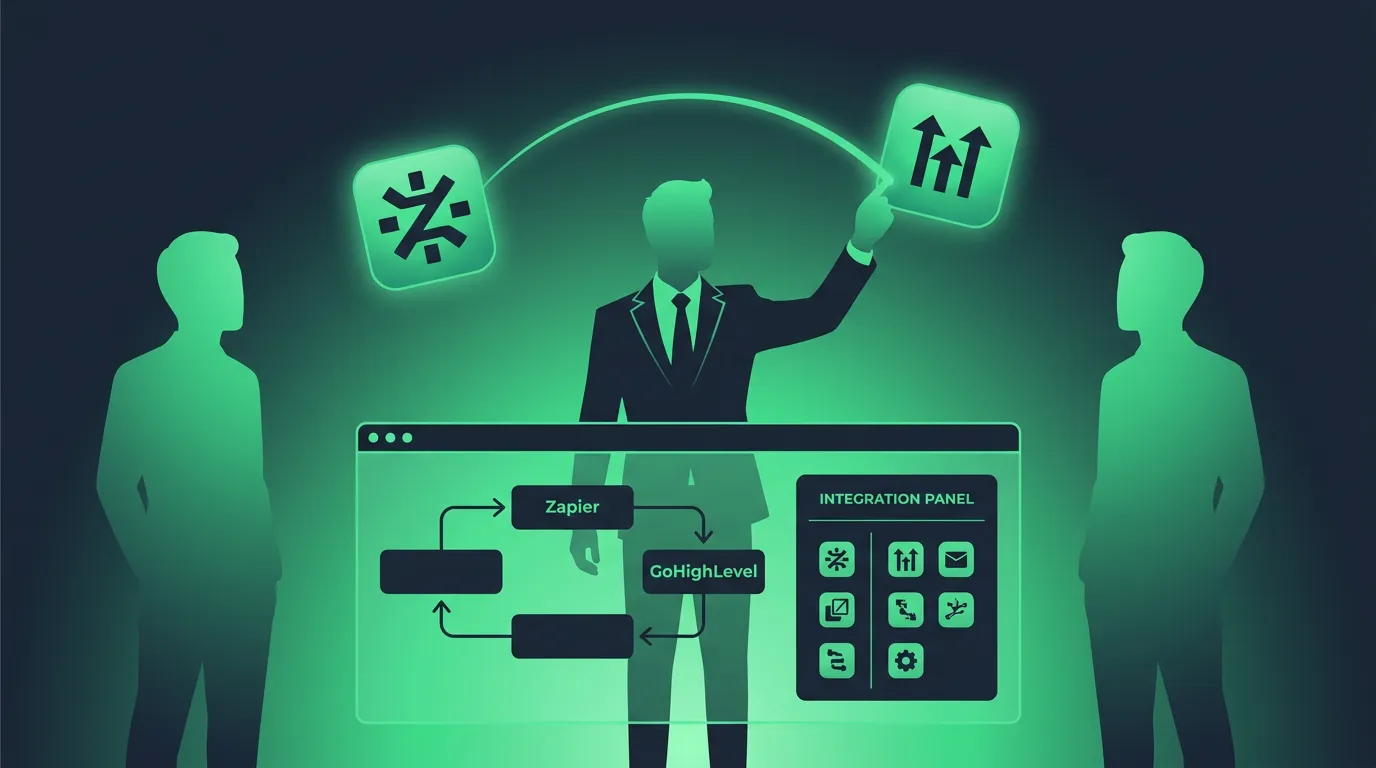
GoHighLevel isn’t listed under its own name in Zapier. HighLevel’s help center says to use LeadConnector in Zapier, calling it “the official, whitelabeled HighLevel connection.” Search “GoHighLevel” and you won’t find an app under that name; search “LeadConnector” and it’s there.
To connect, create a Zap, pick LeadConnector as the trigger or action app, click Sign In, authenticate with your HighLevel credentials and choose the sub-account. The connection then appears under Accounts and can be reused in any Zap.
The app is thin. Zapier lists one trigger and five actions:
| Type | LeadConnector option |
|---|---|
| Trigger | Pipeline Stage Changed |
| Action | Add/Update Contact |
| Action | Add/Update Opportunity |
| Action | Add Lead to Workflow |
| Action | Stop All Workflows for Lead |
| Action | Add Task |
The actions are the useful half. A new row in a Google Sheet, a Typeform response or a Calendly booking can create a contact in GoHighLevel and drop it into a workflow, where your own automation takes over. One agency-level extra: HighLevel documents creating sub-accounts through Zapier, but only on Agency Pro.
Zapier and Make both work, and the choice comes down to preference. Make allows branching scenarios that fork in several directions, which some agencies prefer for conditional logic. With either tool, webhooks are the dependable bridge, because they don’t depend on which triggers the app happens to support.
When the Zapier trigger list runs out
Most events you’ll want to send out of GoHighLevel, like a tag added, a form submitted, an appointment booked or a custom field changed, aren’t Zapier triggers. The fix is to build the trigger inside GoHighLevel instead. Create a workflow with the trigger you need, add a webhook action, and point it at a Webhooks by Zapier URL, a Make webhook or your own endpoint. HighLevel’s help center has a walkthrough for this setup.
Because GoHighLevel’s workflow builder has dozens of triggers, this covers nearly anything. It also keeps the logic in one place: your GoHighLevel automation decides when to fire, and Zapier only carries the data.
The HighLevel API, App Marketplace and custom connections
Does GoHighLevel have an API? Yes. HighLevel provides a REST API (v2) for reading and writing contacts, opportunities, calendars and other CRM data, plus OAuth for apps and private integrations for single-account tokens. API access depends on your plan: basic API access comes with the $297 Unlimited plan and advanced API access with the $497 Agency Pro plan, per GoHighLevel’s pricing tiers.
The API is the layer to build custom apps, sync CRM data with proprietary systems, or replace a high-volume Zap that’s eating your task allowance. Developers can also create apps and list them in the HighLevel App Marketplace, where agencies install them at the agency or sub-account level. Some Marketplace apps are free and some are paid, and certain apps can be installed straight from the workflow builder.
Can GoHighLevel integrate with AI tools?
Yes, in two ways. GoHighLevel’s own AI agents (Conversation AI, Voice AI and Agent Studio) run natively inside the platform, billed per use or through AI Employee plans at $50 or $97 per sub-account per month. For outside AI tools, you connect the same way as any other app, through the API, webhooks or Zapier, and HighLevel’s Agent Studio can call public APIs as part of an agent’s actions.
Six integrations to set up first in a new GoHighLevel sub-account
New sub-accounts need the same few connections almost every time. Getting them live on day one saves a scramble later.
The first is Facebook lead ads into GoHighLevel, with a workflow that texts the new contact right away. Second, Stripe or PayPal tied to a pipeline stage, so an opportunity moves to won when payment lands and onboarding starts without anyone dragging a card. Third, Google Calendar sync, so bookings show up where the team actually looks. Fourth, Google Business Profile, so new reviews show up in GoHighLevel and a low rating alerts a manager. Fifth, QuickBooks for service businesses that invoice, so finance doesn’t re-key payments. Sixth, a Slack alert when a deal reaches a key stage, giving your team a live signal instead of a dashboard someone checks once a day.
None of these need custom development. Agencies usually standardize them into a snapshot or a setup checklist, which is also what a HighLevel Certified Admin is trained to configure. If you’re new to building sub-accounts at all, how to use GoHighLevel covers the basics to get right before you wire in third-party apps.
What GoHighLevel integrations cost as volume grows
Native integrations don’t add to your HighLevel bill, apart from add-ons like WhatsApp. Zapier is where costs creep up: its plans are priced on tasks, and an agency running always-on Zaps across many client accounts can outgrow a low tier quickly. Wherever a native connection or a direct webhook can replace a Zap doing the same job, switch, because it’s cheaper and usually faster than a Zap that waits in a queue.
For low-volume jobs, or to reach one of the thousands of apps GoHighLevel will never build a connector for, Zapier is still the quickest way to automate repetitive tasks without code. The aim is to simplify your operations, not to stack up Zapier tasks you don’t need.
Frequently asked questions
What is the monthly subscription cost of GoHighLevel?
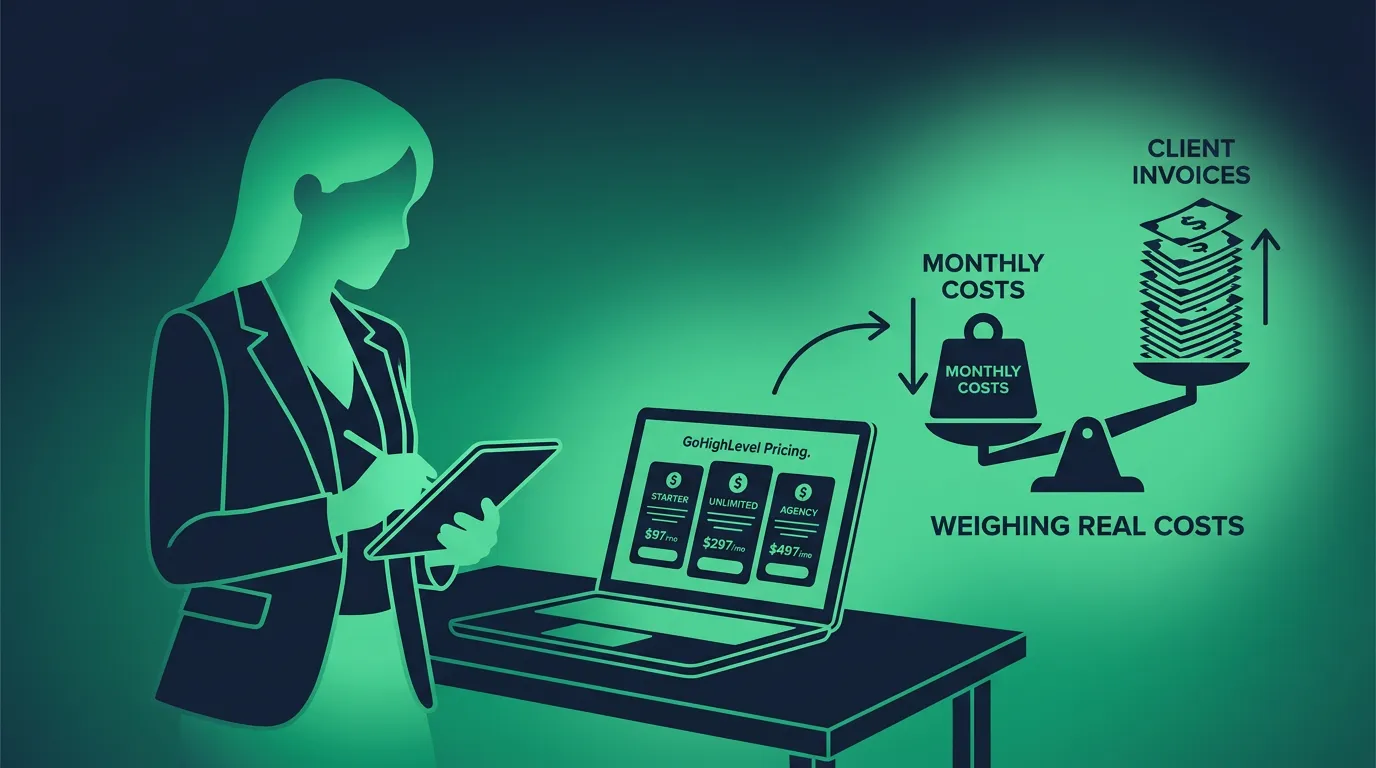
GoHighLevel’s agency plans are Starter at $97/month, Unlimited at $297/month and Agency Pro at $497/month, with Enterprise priced by quote. Integrations don’t add to that, but usage like SMS, email and AI is billed on top, and Zapier or Make are separate subscriptions.
What are the disadvantages of GoHighLevel?
On integrations, the thin Zapier app is the main complaint, since one trigger means most outbound automations need a webhook. Beyond that, the learning curve is steep (community consensus puts proficiency at 60 to 90 days), usage costs can surprise agencies that don’t model them, and individual features trail dedicated tools. Our full GoHighLevel review covers the rest.
Do I need coding knowledge to integrate GoHighLevel?
No, for native integrations, Zapier and webhooks; all three run in a browser. Coding only matters if you build directly on the API or create a Marketplace app.
Is there anything better than GoHighLevel?
For integrations specifically, HubSpot has a much larger app marketplace, but it costs far more once you need marketing automation: Marketing Hub Professional starts at $800 a month billed annually. GoHighLevel’s advantage is that SMS, email, calendars, funnels and the CRM are already built in, so you need fewer integrations to begin with. If you end up recommending it to other agencies, the GoHighLevel affiliate program pays 40% recurring on referrals.