The best CRM for healthcare depends on what kind of organization you run. For a direct-pay practice that markets for its own patients, GoHighLevel is the best-value healthcare CRM for intake, reminders and reviews, provided you add its $297/month HIPAA add-on and sign the BAA first. Hospitals and health systems that need care coordination belong on an enterprise care-coordination platform.
Search results for “healthcare CRM” blur two kinds of software together, and the healthcare market sells both under the same label. One is a marketing and intake CRM: it catches a call the front desk missed, texts a web lead back, books the consult and nudges the no-show to reschedule. The other is clinical software, an EHR or practice management system, that holds the patient record: medical history, diagnoses, treatment notes, prescriptions and insurance billing. Buy the wrong one and you either pay for infrastructure you never use or push protected health information through a tool that was never set up to hold it.
What is a CRM in healthcare?
A healthcare CRM centralizes patient communication and helps healthcare providers manage patient relationships outside the exam room. In customer relationship management terms, the “customer” is a current or prospective patient. It lets you track patient interactions from first inquiry to booked visit: who called, what they asked about, whether they showed up and how satisfied they were afterward. It can automate scheduling, reminders and outreach so the front desk isn’t relying on memory, and it gives a practice one view of the patient journey that a shared inbox or spreadsheet can’t.
Healthcare CRMs differ from a regular CRM in two ways. First, HIPAA: any tool that stores protected health information (a name tied to an appointment type, a text thread mentioning a condition) acts as a business associate, which requires a signed business associate agreement and specific safeguards. Second, clinical records: the CRM’s job mostly ends when the patient arrives, and the electronic health records system takes over from there.
How a healthcare CRM improves patient engagement and healthcare operations
For practices that compete for new patients, the gains come from speed and consistency:
- Faster response. Missed calls and web forms get an instant reply, which matters when a prospective patient is calling several practices the same afternoon.
- Fewer no-shows. Automated reminder texts and emails, with easy rescheduling links, protect the schedule.
- Better patient engagement. Recall campaigns, post-visit check-ins and surveys improve patient satisfaction and keep patients coming back.
- More reviews. Automated review requests after a visit build local search visibility over time.
- Clearer reporting. You can see which ad, referral source or campaign produced booked appointments, which helps patient acquisition spending pay off.
Each of these is patient care that starts before the first visit. Workflow automation is what makes them happen consistently, so the front desk isn’t the only thing holding the system together.
Common types of healthcare CRMs
Healthcare CRMs fall into three broad groups. Marketing and intake CRMs, like GoHighLevel, focus on patient acquisition: lead capture, follow-up, booking and reviews. Patient-communication platforms, like NexHealth, sit on top of a practice management system and handle online scheduling, reminders and recall for existing patients. Enterprise care-coordination CRMs help hospitals and health systems manage patient populations, care teams and referrals across many locations. Knowing which group you need cuts most shortlists in half. General CRMs sit outside all three: Zoho CRM, for example, is free for three users and $14 per user per month on Standard billed annually, but you’d build the healthcare workflows yourself and must confirm the vendor will sign a BAA on your plan before storing patient data.
Top healthcare CRM software compared
Prices below were checked on vendor pages in October 2026.
| Healthcare CRM | Starting price | HIPAA path | Best fit |
|---|---|---|---|
| GoHighLevel | $97/mo flat + $297/mo HIPAA add-on | Add-on on any plan (included on Enterprise), BAA signed in-app | Direct-pay practices and healthcare marketing agencies |
| Salesforce Health Cloud | $350/user/mo billed annually (Sales & Service Core) | Enterprise healthcare platform | Hospitals, health systems and payers needing care coordination |
| HubSpot | Enterprise tiers only for PHI (Sales/Service Hub Enterprise $150/seat) | Sensitive-data setting with BAA tracking on Enterprise | Larger organizations already invested in HubSpot |
| NexHealth | Quote-based | Healthcare-specific vendor | Dental and medical practices wanting booking, reminders and recall synced to their practice software |
GoHighLevel: all-in-one patient relationship management for direct-pay practices
GoHighLevel is an all-in-one marketing CRM, and its strengths line up with what a marketing-driven practice needs to streamline intake and manage patient follow-up.
Missed Call Text Back pays for the subscription on its own for a lot of clinics. When the front desk is mid-checkout and can’t answer, the caller gets a text within seconds instead of voicemail. For a med spa or dental office paying for Google or Meta ads, response speed decides a lot of bookings.
Behind that, a workflow builder lets you automate patient communication from first touch: a consult request at midnight gets an immediate reply, a check-in the next morning if no appointment is booked, and a reminder the day before. Booking calendars let patients schedule themselves. Reputation management sends the review request after the visit. Conversation AI and Voice AI can answer after-hours questions, though they’re billed per use unless the sub-account is on an AI Employee plan ($50 or $97 per month).
For agencies running marketing for several practices, or for a multi-location dental or aesthetics group, sub-accounts and snapshots mean one working intake pipeline can be cloned to each new location instead of rebuilt.
Salesforce Health Cloud
Health Cloud is an enterprise healthcare CRM solution for hospitals, health systems, payers and large provider groups. It’s a scalable healthcare CRM platform built around care coordination, patient 360 records and care teams rather than local marketing. Editions run from $350 per user per month (Sales & Service Core) to $725 (Sales & Service Max), billed annually. That price, plus implementation, puts it out of reach for a single-location clinic, but it’s built to integrate with hospital systems and manage patient populations at scale.
HubSpot
HubSpot lets customers store HIPAA-protected health data and tracks the BAA, but only on Enterprise subscriptions such as Marketing Hub Enterprise ($3,600 a month) or Sales Hub and Service Hub Enterprise ($150 per seat per month). For a small practice, that’s a steep jump from the HubSpot tiers most people start on.
NexHealth
NexHealth focuses on the patient experience around scheduling: online booking, reminders, recalls, waitlists, digital forms and payments. Its synchronizer reads and writes data to more than 70 health record and practice management systems, including Dentrix, Open Dental, Epic and eClinicalWorks. Pricing is quote-based. It’s the stronger choice for a dental office that wants booking synced to its PMS more than it wants ad-driven lead nurture.
Is GoHighLevel HIPAA compliant?
Not by default, and HighLevel says so. HIPAA support is an add-on that costs $297 per month or $2,970 per year, billed at the agency level, and agencies on any plan can buy it. It’s included on the Enterprise plan. HighLevel provides the business associate agreement inside the app, says activation typically takes 48 to 72 hours, and lists AES-256 encryption, role-based access controls and user activity logs among the safeguards. Two details matter before you buy: HIPAA must be enabled for each sub-account that handles patient data, and once purchased and enabled, the add-on can’t be deactivated.
Signing a BAA is necessary but not sufficient. HighLevel’s own HIPAA page says organizations remain responsible for meeting all HIPAA requirements. That means a documented risk assessment, a designated privacy officer, staff training on what can and can’t go into the CRM, and audit logs someone actually reviews.
A practical rule: if a field, note or text could tell a stranger something about someone’s health, treat it as protected health information and keep it inside the HIPAA-enabled configuration. If a sub-account only ever holds a name, phone number and “interested in a consultation,” the exposure is smaller but not zero. Talk to whoever handles compliance for your practice before you roll anything out.
How a healthcare CRM system works with your EHR
Once a lead becomes a scheduled patient, GoHighLevel has little to offer. It can’t document an encounter, track a treatment plan, e-prescribe, submit insurance claims or hold lab and imaging results. It isn’t a patient portal for clinical records either.
So most practices that run their own patient acquisition use two systems: a marketing CRM tool for the front end and a clinical platform for care delivery and billing. The question is how they integrate. Some patient-communication vendors, NexHealth among them, integrate directly with practice management systems. GoHighLevel usually needs middleware like Zapier or Make to integrate with clinical software and pass a booked appointment across. Any middleware that touches patient data needs to sit inside your compliance program too. Done well, the care team never has to open the marketing tool, and patient information stays where it belongs.
Which healthcare organizations GoHighLevel fits
GoHighLevel fits direct-pay, consumer-marketed healthcare practices best: dental and orthodontic offices, med spas, chiropractic and physical therapy clinics, concierge and functional medicine, and private-pay therapy and counseling practices. These businesses run paid ads, compete on local search and see enough inquiries that a missed call is a real, countable loss. They rely on CRM data to see which campaigns fill the schedule, and a marketing CRM is built to help healthcare professionals in exactly that position.
It fits poorly for hospitals, large multi-payer health systems and specialty practices that run almost entirely on physician referrals. Those healthcare institutions need referral management and care coordination across large clinical teams, which is the job enterprise care-coordination platforms are built for.
How to choose the best healthcare CRM software for your practice
Choosing the best CRM software comes down to matching the tool to your healthcare needs rather than to a feature checklist. Start by counting monthly inquiries across every channel: phone, web form, Instagram, chat and referrals. Under fifteen a month, mostly from existing patients, and a CRM is solving a problem you don’t have yet. Over thirty, from paid channels or a busy website, and software that can automate the response layer usually pays for itself.
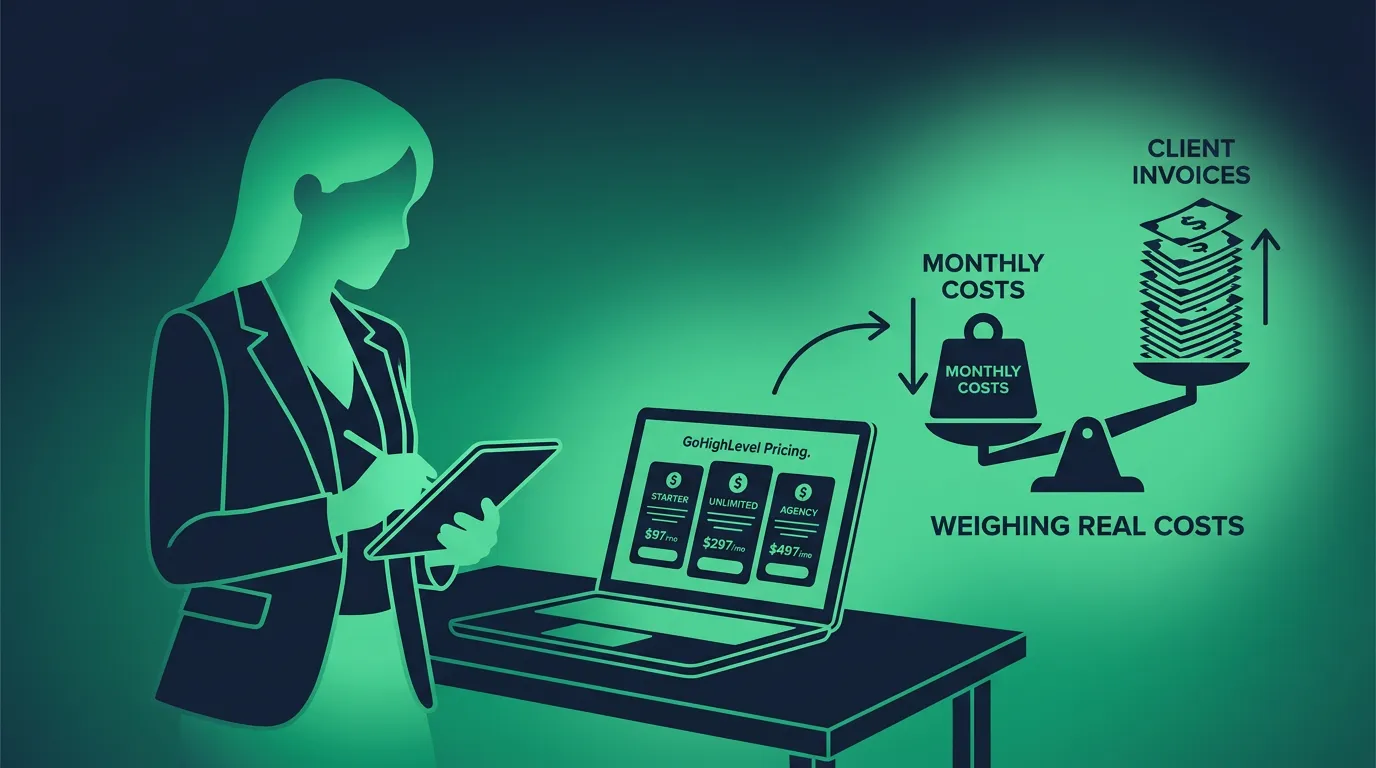
Next, separate the jobs. Before the visit: capture, respond, nurture, schedule, remind, request a review. After: charting, treatment notes, billing and clinical follow-up. Price a CRM like GoHighLevel against the first list and your clinical software against the second. For GoHighLevel, budget $97 plus $297 for HIPAA, so $394 a month before messaging usage.
Then check the core CRM features against how your healthcare teams actually work: two-way texting, online booking, reminders, recall campaigns, review requests and reporting by location. Before you choose a healthcare CRM, also check integration. Make sure the CRM can pass appointments to your practice management system, and confirm whether that connection is native or needs middleware. A CRM that can’t integrate with your clinical stack creates double entry, which is where errors and privacy slips happen.
Finally, settle compliance before any PHI moves: whether you need the HIPAA add-on, who signs the BAA, which sub-accounts get HIPAA enabled and who in the practice owns that decision. Rolling out marketing first and fixing compliance later is the most common and most avoidable mistake in this category.
If GoHighLevel looks right for intake, our GoHighLevel pricing guide covers the plans and add-ons in detail, and the full GoHighLevel review covers the platform beyond healthcare. The 14-day trial requires a card on file, and you shouldn’t put real patient data into a trial account before HIPAA is set up.
For another regulated industry with similar compliance questions, see our CRM for banking guide. Businesses with lighter compliance needs can compare CRM for retail, CRM for nonprofits and CRM for real estate, or browse the best CRM software roundup.