GoHighLevel templates are pre-built pages and assets you load into a sub-account instead of designing from scratch, and the best place to start is HighLevel’s own Template Library. It’s included on every plan without extra fees, and it covers far more than funnels: websites, email campaigns, Social Planner posts, forms, surveys, documents and ad creative all have templates.
Paid GHL templates from independent sellers can look sharper or fit a niche more closely, and they’re worth buying in some cases. This guide covers what the Template Library includes, the types of GoHighLevel templates and when to use each, free versus paid, how to import and share templates, and how agencies build their own.
What’s included in the GoHighLevel template library
HighLevel describes its Template Library as “a collection of professionally designed templates for websites, funnels, social media posts, email campaigns, and even more areas,” with stock images and placeholder content included. On the HighLevel support portal, the library covers:
| Template type | Where to find it |
|---|---|
| Funnels and websites | Sites, then Funnels or Websites |
| Email campaigns | Marketing, then Emails, then Templates |
| Social Planner posts | Marketing, then Social Planner |
| Forms and surveys | Sites, then Forms or Surveys |
| Documents and contracts | Documents tab |
| Ads (80+ templates) | Marketing, then Ads Manager |
There are also separate libraries for quizzes and webinars. All of it is available to all users at no extra charge, so small business owners on a single sub-account get the same template library as an agency running fifty client accounts. Email templates, for example, come with the same drag-and-drop editor your email campaigns use, so a starter nurture sequence is ready to edit on day one.
The trade-off with free is familiarity. Everyone on the platform can use the same layouts, so a popular template in a busy niche can show up on a competitor’s site down the street. Changing the hero section, fonts and photos is usually enough to make it your own.
Types of GoHighLevel templates
Three terms get mixed up constantly, and mixing them up is how people buy the wrong thing.
GoHighLevel funnel templates
A funnel template covers one conversion goal: an opt-in page and thank-you page, a booking page, a sales page with an order form and upsell, a webinar registration. Most agency work falls into a handful of repeating funnel types:
- A lead generation funnel built around one opt-in form, the standard for local service businesses
- A service funnel for appointment booking, used by dentists, med spas, contractors and real estate agents
- A tripwire or low-ticket offer funnel that sells something small to a cold visitor, then offers an upsell
- A webinar or challenge funnel that runs a prospect through a few days of content before the pitch
- A course funnel or enrollment funnel that course creators use for course sales and digital course launches
- A longer marketing funnel that nurtures a cold list with email and SMS over weeks
Templates are often sold as “high-converting,” but no layout converts on its own. Performance depends on the offer, the traffic and whether the follow-up workflow behind the form actually works.
GoHighLevel website templates
A website template is a full multi-page site (home, about, services, blog, contact) with navigation. It’s the right pick when a client needs a real web presence, or when you’re building your own agency website. A GoHighLevel website template is edited in the same visual funnel builder as single pages, so the skills carry over. HighLevel also supports WordPress sites from a template if you need WordPress specifically.
Snapshots
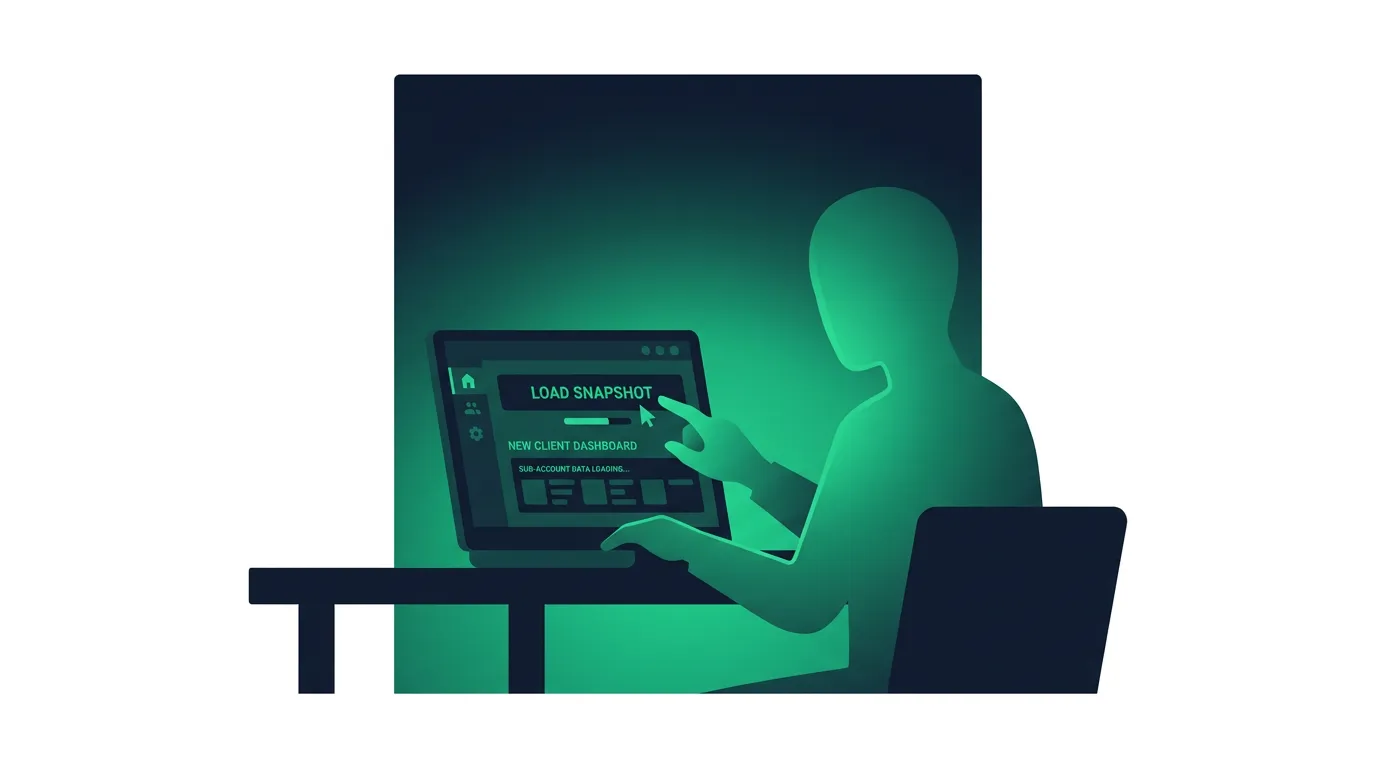
A snapshot is a different tool. It copies an entire sub-account’s setup, funnels and websites included, along with the workflows, pipelines, calendars and email and SMS templates around them. If you keep rebuilding the same complete account for clients in one niche, GoHighLevel snapshots are the better fit. If you need one good page, a template does the job.
Free vs paid GHL templates
Start free. The built-in library covers the common business needs, and every template is fully customizable in the drag-and-drop builder, so a decent eye and an hour of editing gets most pages where they need to be.
Paying makes sense in three situations: your niche isn’t covered well, you want a design that doesn’t look like every other GHL funnel, or you’re about to reuse the same page across many client accounts and the hours saved justify it. Premium templates are sold by independent agencies and designers, often bundled with snapshots, and HighLevel’s App Marketplace lists snapshots for sale as well. Prices and quality vary widely, and HighLevel doesn’t vet or set them.
Before you buy, ask for a live demo link, check it on a phone, ask whether forms and workflows are included or only the pages, and confirm you can use it across multiple client accounts.
Best GoHighLevel templates by niche
The best GoHighLevel templates are the ones built around how a specific industry sells, so pick by niche before you pick by looks.
Local service businesses (plumbers, roofers, HVAC, cleaners) need a short lead generation page or booking page: a headline with the service area, a contact form with three or four fields, click-to-call, reviews near the top. Pair it with a missed-call text-back workflow in the CRM.
Real estate agents usually want a home valuation opt-in, a buyer or seller guide download, and an agent website template with listings and an about page. The follow-up matters more than the page, since real estate leads often take months to act.
Coaches and course creators lean on webinar, challenge and course funnel templates, with an order form and an upsell, plus membership pages for delivery.
Digital service and consulting businesses usually need booking pages for a discovery call plus a short case-study page, which the templates for specific industries like coaching and consulting cover well.
Agency owners need two things: an agency website for their own brand, and a small set of client templates they reuse. A custom GoHighLevel template built once from your best-performing client page is usually worth more than any premium template you could buy.
GoHighLevel templates vs building from scratch
Templates help agencies launch faster. A layout with sections, hero sections, font pairings and spacing already worked out lets you spend your time on the copy and the offer, which drive results. For client onboarding, starting each new account from the same tested GHL funnel also means fewer things break.
Building from scratch makes sense for a brand with strict design guidelines, or a page with an unusual structure no template matches. Even then, many designers start from a blank template and save their sections as reusable blocks, so the second build goes quicker than the first.
Using AI with GHL templates
HighLevel’s Funnel & Website AI can generate pages “from prompts, guided inputs, URLs, and images,” then refine them through chat. It’s in Sites, under Funnels or Websites, through Build with AI, and inside existing pages through the Ask AI panel. HighLevel’s help center says it’s currently available without additional AI usage charges, subject to usage limits, which is different from Content AI’s pay-per-use pricing elsewhere in the platform.
It’s a decent way to get a first draft for a niche the template library doesn’t cover. Treat the output like any template: rewrite the copy for the real offer and check every claim before it goes live.
How to import a GoHighLevel template
Native templates need no import. Pick one from the library inside a sub-account and it’s added, fully editable.
Funnels from another account usually arrive as a share link. The owner opens Sites, then Funnels, clicks the three dots next to the funnel, chooses Share, and sends the link; the recipient opens it and imports the funnel straight into their own account. Agencies can format share links on their own white-label domain so the link carries the agency’s brand. For a full account setup, sellers send a snapshot link instead, which imports into your agency’s snapshot library.
Moving from ClickFunnels? HighLevel’s help center has a dedicated guide for importing a funnel from ClickFunnels, which saves rebuilding pages by hand.
After any import, check three things. Forms need to map to custom fields that exist in the new account, and every form needs a workflow that does something with the submission. Booking widgets need a real calendar. And if you copied individual pages, page-level tracking code is intentionally left out of the copy, so re-add your pixel or analytics scripts. Site-wide tracking set in the funnel’s settings does carry over.
Building your own templates as an agency
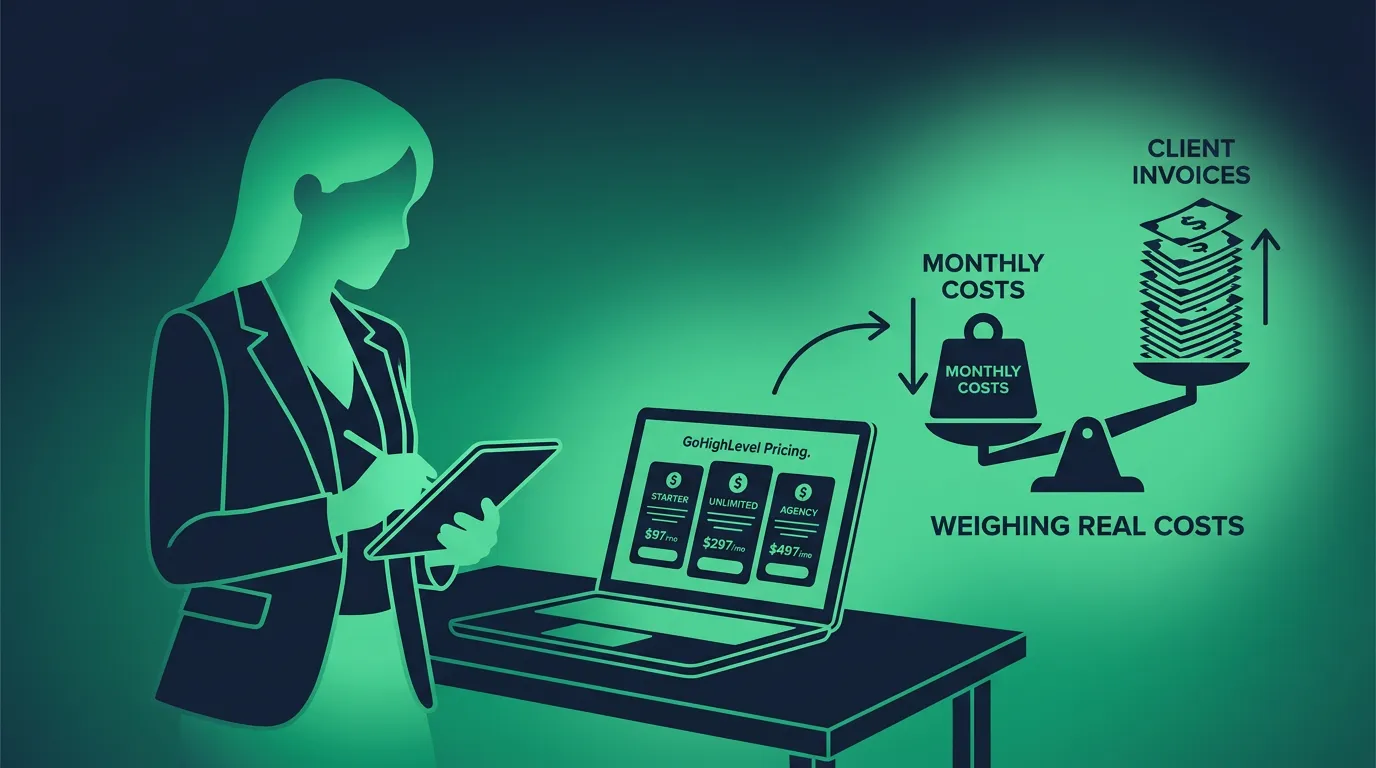
Agencies that keep cloning the same funnel for the third or fourth business owner in a niche should turn it into a template. HighLevel lets you add custom templates to the Template Library at the agency level, so they appear for every sub-account. That ability requires the $497 Agency Pro plan.
Agencies on Starter ($97) and Unlimited ($297) can still log into Agency View, open the Template Library, and hide individual templates or whole categories from sub-accounts, which is useful for keeping clients away from layouts that don’t suit them. Agencies can also choose whether templates are visible to clients at all in company settings.
For reusable pieces smaller than a page, the page builder has saved sections and element templates, so a hero section or pricing table you like can drop into any future page.
If you resell HighLevel through GoHighLevel SaaS mode, a curated set of industry templates becomes part of what clients get on day one, and hiding the generic ones keeps the experience focused on your niche.
Frequently asked questions
Are GoHighLevel templates free?
The built-in Template Library is free on every plan, with no per-template fee. Templates from third-party sellers cost whatever the seller charges.
Can I use the same template for multiple clients?
Yes. Library templates can be used in as many sub-accounts as you manage. For purchased templates, check the seller’s license, since terms vary on how many client accounts you can use them in and whether you can resell them.
Can I share my GHL templates with other users?
Yes. Share a funnel with a share link, or share a whole setup as a snapshot. Snapshot links can be restricted to specific agencies and protected against resale.
Do GHL templates work on mobile?
Library templates are built to be responsive, and you can preview mobile layouts in the builder. Purchased templates with custom code sometimes stack badly on small screens, so test each page on an actual phone before launch.
Do I need to know how to code?
No. Templates are edited in the visual drag-and-drop builder. Custom code is optional and mostly used for tracking scripts or unusual layouts.
Can I create my own GHL templates to reuse?
Yes, in two ways. Any agency can save sections and element templates in the page builder, and reuse a funnel by sharing it to another sub-account with a share link. Adding a custom template to the agency-wide Template Library, so every sub-account sees it, requires the $497 plan.
Can agencies hide templates from sub-accounts?
Yes. Admins on every agency plan can hide individual templates or whole categories in Agency View, and can turn template visibility for clients off entirely in company settings.
How do I choose GoHighLevel templates for local service businesses?
Pick the funnel type that matches how the business sells. Most local service businesses need a lead generation or appointment booking funnel with a short form, click-to-call and reviews near the top, followed by a missed-call text-back and reminder workflow. A long sales page rarely suits them.
Where templates fit with the CRM and the rest of GoHighLevel
Templates are the fastest way to see how HighLevel’s funnel builder, forms and workflows connect, which is why they’re a good first project if you’re still learning how to use GoHighLevel. The HighLevel Certified Admin program covers funnels and automation in more depth, and some agencies earn alongside template and snapshot sales through GoHighLevel’s affiliate program. For which plan includes what, see GoHighLevel’s pricing tiers, and for the wider verdict on the platform, read our GoHighLevel review.