The best CRM for financial advisors is an advisor-specific system of record: Redtail if you want value and broad integrations, Wealthbox if you want a cleaner interface, or Salesforce if you’re a large wealth management firm with admin resources. GoHighLevel doesn’t replace any of them. It’s worth adding only as a marketing layer for advisors who generate their own leads and lose prospects to slow follow-up.
That split matters because “CRM for financial advisors” covers two different jobs. One is client management: modeling households and accounts, connecting to custodians and planning software, and keeping records the way regulators expect. The other is lead generation: capturing a prospect the moment they ask for a consultation, responding before another financial advisor does, and nurturing them toward a discovery call. Pick the wrong tool and you either overpay for compliance infrastructure you don’t need yet or create a records gap your compliance officer will find.
Why financial advisors need a CRM built for their industry
Generic customer relationship management software was designed for sales teams closing software deals in a few weeks. Financial advice runs on a slower clock. A prospect is deciding whether to trust a stranger with a meaningful share of their savings and their financial goals, and that usually takes a seminar, a referral from a friend and two or three real conversations before anyone signs an advisory agreement.
The data model is different too. An advisory client is a household: a primary client, a spouse, sometimes dependents, trusts or business entities, and accounts at one or more custodians, plus held-away assets you need to see for planning. An advisor CRM tracks each client relationship at the household level natively. A general-purpose tool built for contact management treats every person as a separate record.
Then there’s regulation. Nearly every client interaction is a record. RIAs must keep written communications relating to advice under SEC Rule 204-2, generally for five years. Broker-dealers keep business communications under SEA Rule 17a-4 and FINRA Rule 4511, which sets a six-year default where no other period applies. A CRM that sends automated emails and texts for a financial advisor is generating exactly those records.
What to look for in CRM software for financial advisors
Before comparing vendors, decide which of these your advisory firm actually needs:
- Household and client profiles that link spouses, dependents, entities and accounts.
- Integration with your custodian, financial planning software and portfolio management systems, so client data flows in instead of being retyped.
- Workflow automation for client onboarding, annual reviews, RMD reminders and service requests.
- Compliance support: an audit trail, role-based permissions and a clean path to your archiving tool.
- Meeting notes and activity tracking tied to the household, so every client interaction is in one place.
- Marketing and follow-up tools if you generate your own leads.
- AI-powered features such as meeting note-takers, now common as add-ons.
Advisor CRMs cover the first five well. Marketing automation is where they’re thinnest, and that’s the gap GoHighLevel fills.
Best CRM software for financial advisors compared
Prices below were checked on vendor pricing pages in October 2026.
| CRM | Starting price | Built for | Best fit |
|---|---|---|---|
| Redtail CRM | $39/user/mo annual ($45 monthly), Launch, up to 5 users | Financial advisors | Independent advisors and RIAs who want value and broad integrations |
| Wealthbox | $59/user/mo (Basic); Pro $75, Premier $99 | Financial advisors | Small and mid-size firms that want a modern interface |
| Salesforce Financial Services Cloud | $325/user/mo billed annually | Wealth management and banking | Large wealth management firms with Salesforce admins |
| Zoho CRM | Free for 3 users; Standard $14/user/mo annual | General business | Budget-minded firms willing to build household fields themselves |
| GoHighLevel | $97/mo flat | Marketing and lead follow-up | Advisors running seminars, webinars or paid ads, alongside an advisor CRM |
Redtail CRM
Redtail is built specifically for financial advisors, with household records, workflows and a long list of advisor-tech integrations. Launch costs $39 per user per month billed annually ($45 monthly) for up to five users. Growth costs $59 billed annually ($65 monthly) with unlimited users and adds Redtail Imaging and Redtail Speak, its texting tool. The free trial covers the full Growth plan. Its price per seat is the lowest of the advisor-specific options here.
Wealthbox
Wealthbox is an advisor CRM built around a clean, social-feed style interface. Basic costs $59 per user per month, Pro $75 and Premier $99, with Enterprise priced on request and a 14-day free trial that needs no credit card. It also sells an AI note-taker add-on at an introductory $49 per user per month. Wealthbox and Redtail cover the same core jobs, so the choice usually comes down to interface preference and which integrations your custodian and planning software support.
Salesforce Financial Services Cloud
This is the enterprise option. Sales or Service editions run $325, $500 and $700 per user per month (Core, Advanced and Max), billed annually. It’s highly customizable and suits large wealth management firms with in-house Salesforce administrators. For a three-advisor RIA, the complexity and cost rarely pay off.
Zoho CRM
Zoho CRM is free for up to three users, and Standard costs $14 per user per month billed annually. It’s a general CRM, so you’d build household fields, compliance workflows and custodian connections yourself. It suits a cost-conscious practice with someone technical on staff.
Where GoHighLevel fits in an advisory practice
GoHighLevel is a marketing platform, and for advisors it does one job well: fast, automated response to inbound interest. That matters most to an independent financial advisor doing their own marketing rather than working a firm-supplied lead list.
Missed Call Text Back means a prospect who calls while you’re in a client meeting gets a text within seconds instead of voicemail. Instant replies on a “schedule a consultation” form shrink response time from hours to seconds. Conversation AI and Voice AI can qualify after-hours inquiries and book a discovery call, though they’re billed per use unless the sub-account is on an AI Employee plan ($50 or $97 per month).
Behind that first response, pipeline stages show every open prospect: new lead, discovery call booked, proposal sent, onboarding, active client. Workflows automate followup with a webinar attendee who didn’t book in the first week, sending educational content and check-ins over the next month. Tags let you run separate nurture tracks for a pre-retiree weighing a 401(k) rollover and a younger professional just starting to invest. Booking calendars with reminders cut no-shows on discovery calls that cost real money to generate.
For firms with several advisors, or an IMO with many producers, snapshots let you build one lead-to-discovery-call pipeline and clone it into every advisor’s account, with role-based permissions keeping a marketing assistant’s access separate from an advisor’s view.
Where GoHighLevel stops
Once a prospect becomes a client, GoHighLevel has little to offer. It doesn’t model households or held-away accounts, doesn’t connect to custodians such as Schwab, Fidelity or Pershing, and doesn’t integrate with financial planning software like eMoney, MoneyGuide or RightCapital. It isn’t sold as a compliant archive either.
So the realistic setup for a financial advisor with real lead volume is two systems. The advisor CRM holds the client record, household data and audit trail and connects to custodians and planning tools. GoHighLevel handles lead capture, response and nurture. The handoff matters as much as either tool: a prospect who converts in GoHighLevel but never reaches your system of record is a supervision gap. Set up a native integration, Zapier or a clear manual step so the CRM data for every new client lands in the right place.
How a CRM helps financial advisors with compliance
No CRM is “FINRA compliant” or “SEC compliant” by itself. Compliance comes from how communications are retained and supervised, so check how any CRM fits your archiving and supervision process.
Every automated email, text and review request is a business communication. RIAs keep written communications relating to advice under Rule 204-2. Broker-dealers preserve records in a format that meets SEA Rule 17a-4, as FINRA Rule 4511 requires. Archiving tools like Smarsh and Global Relay capture those messages across channels, and advisor CRMs are typically set up to work alongside them.
The SEC Marketing Rule, Rule 206(4)-1, reached its compliance date on November 4, 2022. It lets RIAs use testimonials and endorsements, which the old rule effectively banned, as long as required disclosures are made and most paid promoters sign a written agreement. A review-request workflow in any CRM, GoHighLevel included, needs compliance sign-off on the wording before it runs. Broker-dealer communications also fall under FINRA Rule 2210.
How to choose a CRM for your advisory firm
Start with where new clients came from over the last year. If referrals and an inherited book dominate, put your budget into a solid advisor CRM and skip the marketing layer. If seminars, webinars or paid campaigns produce a meaningful share of new households, fast response and consistent nurture can justify adding GoHighLevel.
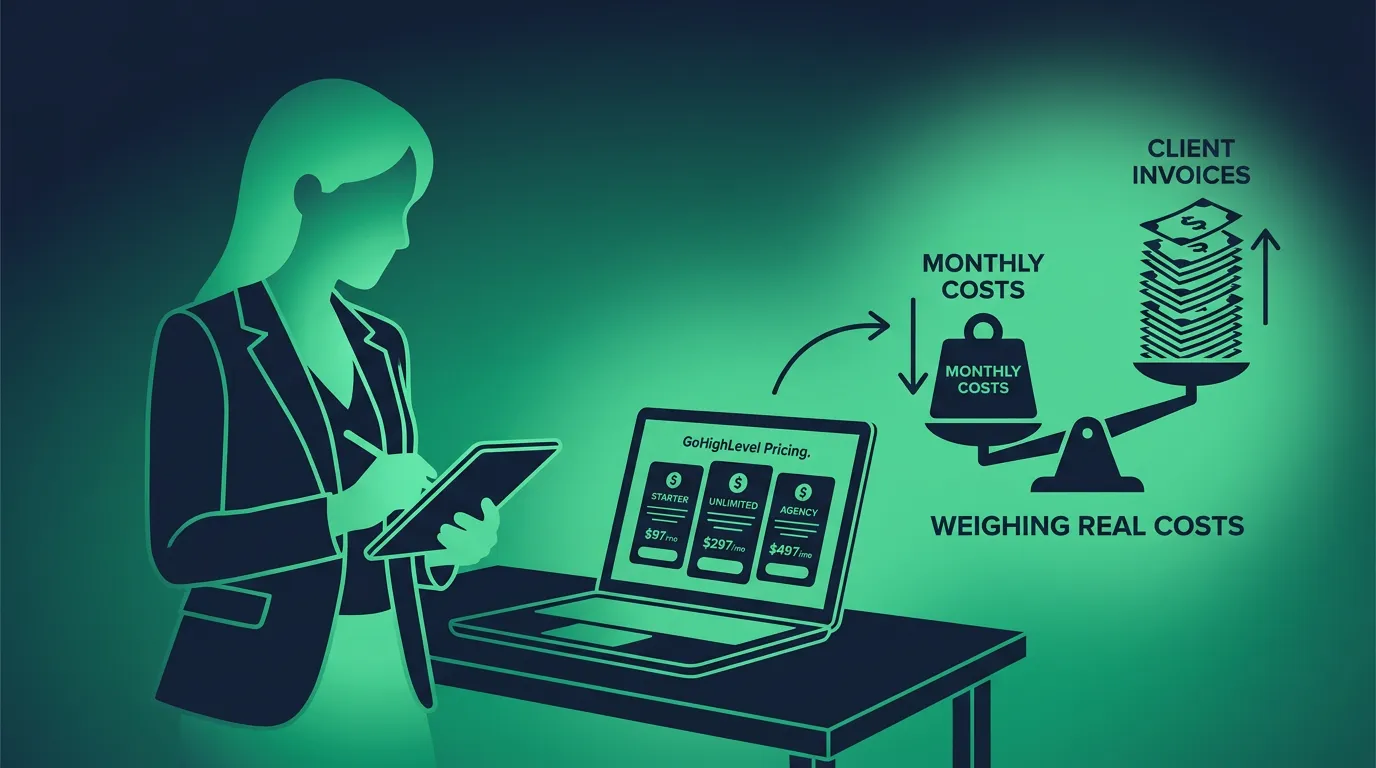
Next, separate the two jobs. Before someone becomes a client: capture, respond, nurture, book. After: household data, planning, archiving, client service and the overall client experience. Price an advisor CRM against the second list and GoHighLevel against the first. A three-advisor firm on Wealthbox Pro pays $225 a month in seats. Adding GoHighLevel Starter brings the total to $322 plus messaging usage, still a fraction of the cost of three Salesforce seats.
Check integrations before you sign. Make sure the CRM connects to your custodian, planning software and archiving tool, and that the data from tools you already use carries over.
Finally, involve compliance before turning anything on. Confirm what needs archiving, which automated messages need review and how testimonials must be worded. That conversation is cheap up front and expensive after an exam.
If GoHighLevel looks right for lead response, our GoHighLevel pricing guide explains which tier fits a solo advisor versus a multi-advisor practice or IMO, and the full GoHighLevel review covers the platform in depth. The 14-day trial requires a card on file.
Other relationship-driven businesses face a similar split between marketing tools and records. See our guides to CRM for service businesses, CRM for startups, CRM for distributors and CRM for automotive dealers, or compare more tools in our best CRM software roundup.