The best CRM for plumbers depends on which problem is costing you jobs. If missed calls and unanswered quotes are the leak, GoHighLevel is the stronger tool; if scheduling, dispatch and invoicing are the mess, start with dispatch software.
Most plumbing companies with steady lead flow end up running both. GoHighLevel handles everything before a technician is dispatched, and the dispatch platform handles everything after. The first call back wins the job; the second system makes sure the job gets done and billed. The rest of this page explains where that line sits and what each option costs.
What a CRM for plumbers needs to do
Customer relationship management software was built for sales teams working deals over weeks. A plumbing service business runs on a different clock, and generic CRMs miss what plumbing contractors actually need. Three things matter more than anything on a feature grid.
Response speed comes first. A homeowner with a burst pipe at 9pm calls the first few plumbers on Google and hires whoever calls back. A CRM for plumbing has to answer emergency calls even when nobody can pick up, which in practice means an automatic text the moment a call is missed.
The job itself comes second. Once a service call is booked, the work that matters is dispatch, routing, parts, labor hours, work orders and the invoice at the door. That’s field service management software, and most CRMs, GoHighLevel included, don’t do it.
Reviews come third. Local plumbing searches are decided by Google reviews, so the right CRM for your plumbing business should ask for a review automatically after every plumbing job.
Add a mobile CRM (techs live in the truck, not at a desk), QuickBooks sync and online booking so customers book and schedule routine plumbing maintenance without phone tag, and you have the real checklist. A CRM built for B2B sales misses most of it, which is why most plumbing software combines the CRM system with scheduling.
Best CRMs for plumbers and their pricing
Prices were checked on each vendor’s pricing page in October 2026.
| Software | Starting price | Pricing model | Free trial | Best for |
|---|---|---|---|---|
| GoHighLevel | $97/mo (Starter) | Per company, unlimited users; SMS and calls extra | 14 days, card required | Lead capture, follow-up, reviews and marketing automation |
| Jobber | $29/mo prepaid annually, $49/mo month-to-month (Core, 1 user) | Per plan with user caps; extra users $29/mo | 14 days, no card | Solo plumbers and small crews that need scheduling, quotes and invoicing |
| Housecall Pro | $59/mo billed annually, $79/mo monthly (Basic, 1 user) | Per plan with user caps; extra users $35/mo on Max | 14 days, no card | Small to mid-size residential shops |
| ServiceTitan | Quote only (Starter, Essentials, The Works) | Per technician | Demo | Larger shops with a call center, dispatchers and multiple crews |
Jobber’s paid tiers step up to Connect ($99/mo prepaid, up to 5 users), Grow ($149/mo prepaid, up to 10 users) and Plus ($229/mo prepaid, 5 to 15 users). Housecall Pro’s Essentials plan is $149/mo billed annually for 5 users, and Max is $299/mo for 8 users. ServiceTitan doesn’t publish prices at all; it quotes per technician.
The pricing model matters as much as the sticker price. Dispatch platforms charge by user or technician, so cost climbs as the crew grows. GoHighLevel charges per company, with unlimited users and contacts, but bills texting and calling on usage.
Where GoHighLevel fits in a plumbing business
As an all-in-one CRM for the front office, GoHighLevel earns its money in the gap between “someone needs a plumber” and “a job is on the schedule.” For shops running Google Ads or Local Services Ads, or ranking for “plumber near me,” that gap is where revenue leaks.
Missed calls on an emergency service call
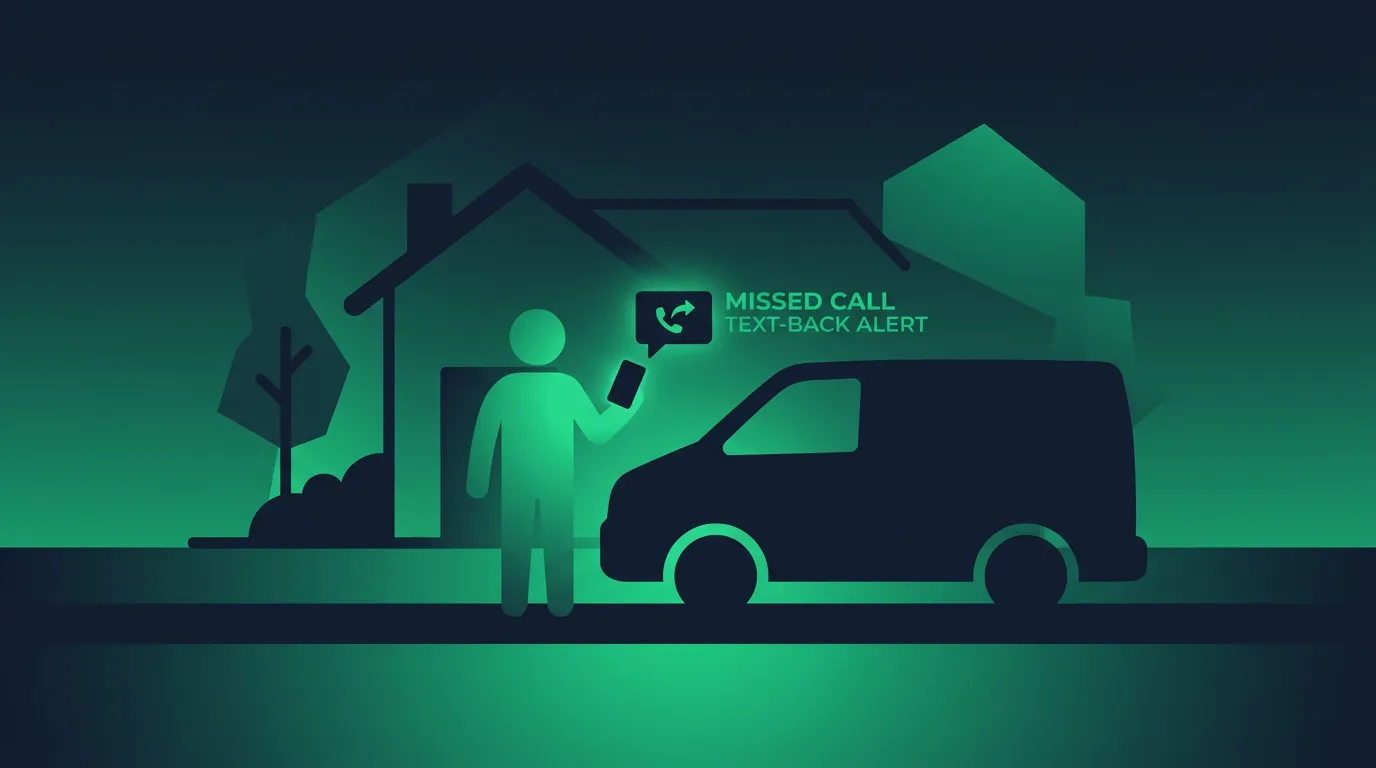
Missed Call Text Back is the feature most plumbers buy it for. When a call goes unanswered because you’re under a sink, driving or closed for the night, GoHighLevel sends an automatic SMS. A caller who won’t leave a voicemail will often answer a text, and that turns a lost lead into a conversation you can schedule from your phone. For a plumbing service that lives on emergency work, being the first call back is most of the battle. If you also turn on Conversation AI to answer that text, remember it’s billed per use unless the account is on an AI Employee plan ($50 or $97 per month per sub-account).
Quote follow-up, scheduling and automated reminders
Estimates are where most plumbing companies lose money quietly. You send an estimate for a water heater replacement or a repipe on Tuesday, and nobody follows up. A GoHighLevel workflow can text and email that customer a day later, again before the quote expires, and once more a week after. You can build the estimate itself in GoHighLevel and send it from the mobile app, and automated reminders confirm each booked service call the day before. Customers can also schedule themselves through a booking calendar on your website, and the appointment syncs to Google Calendar.
Review automation and maintenance agreements
When a job closes, GoHighLevel can send a review request automatically. If you invoice through QuickBooks, HighLevel’s help center documents a two-way QuickBooks integration and a workflow that sends the review request when the invoice is marked paid. The same automation handles maintenance agreements. A shop can schedule an annual water heater flush reminder twelve months out and let the system book it, which is how small shops close more jobs from customers they already have and keep customer relationships warm between emergencies.
All of this shows up on one dashboard, so the office can see lead source, follow-up status and booked calls without a spreadsheet. It helps a two-person office stay organized without hiring someone to chase callbacks.
Mobile app and real-time access from the truck
Plumbers don’t sit at desks, so the mobile app matters more than the desktop dashboard. The LeadConnector app (free on every plan) lets a tech reply to texts, see the pipeline, check the schedule and send an estimate or invoice from the driveway. Notifications arrive in real time when a new lead comes in. What the app won’t do is show a dispatcher where every truck is or let a tech log parts against a plumbing job; that’s still field service territory.
Where dispatch, work orders and invoices need field service software
Once a job is booked, the work changes. GoHighLevel has calendars, but it has no dispatch board. It can’t assign a technician by location and skill, can’t optimize a multi-stop route, can’t track a job’s cost against labor and parts from the truck, and doesn’t produce work orders a tech can update on site. Job management, from “booked” to “invoiced,” is field service software’s job.
Jobber is the easiest place to start for a solo plumber or a small crew. Its Core plan covers online booking, quotes, invoicing and payments for one user. Route optimization starts on Connect, and the custom automation builder on Grow. Housecall Pro targets residential home service contractors, and even its Basic plan includes scheduling and dispatching, quotes, invoices, payments and review management. ServiceTitan is the heavy option for larger plumbing companies with call centers, dispatchers and multiple trades, and its per-technician quote pricing reflects that.
All three include some CRM management and marketing features. For a shop getting most of its work from repeat customers and referrals, those built-in tools may be the only CRM option you need. GoHighLevel starts to pay off when lead volume and ad spend grow past what the bolted-on marketing in a dispatch platform can automate.
Integration between GoHighLevel and your field service tool
A two-tool setup only works if the handoff is clean. The usual pattern: a lead comes in through GoHighLevel, moves through the pipeline, gets booked, and then a Zapier zap or webhook creates the customer and job in the dispatch tool. When the job is completed and invoiced, a trigger sends the customer back to GoHighLevel for a review request and future maintenance reminders.
Before you buy, confirm two things. First, that your dispatch plan exposes an API or Zapier integration. Jobber includes Zapier on every plan, including Core. Housecall Pro only opens Zapier and its API on Max ($299/mo billed annually), which changes the math for a small shop that wants both tools. Second, who owns the sync when it breaks. A missed sync means a customer gets a review request for a job that hasn’t happened, which is worse than no automation at all.
What plumbing CRM software really costs
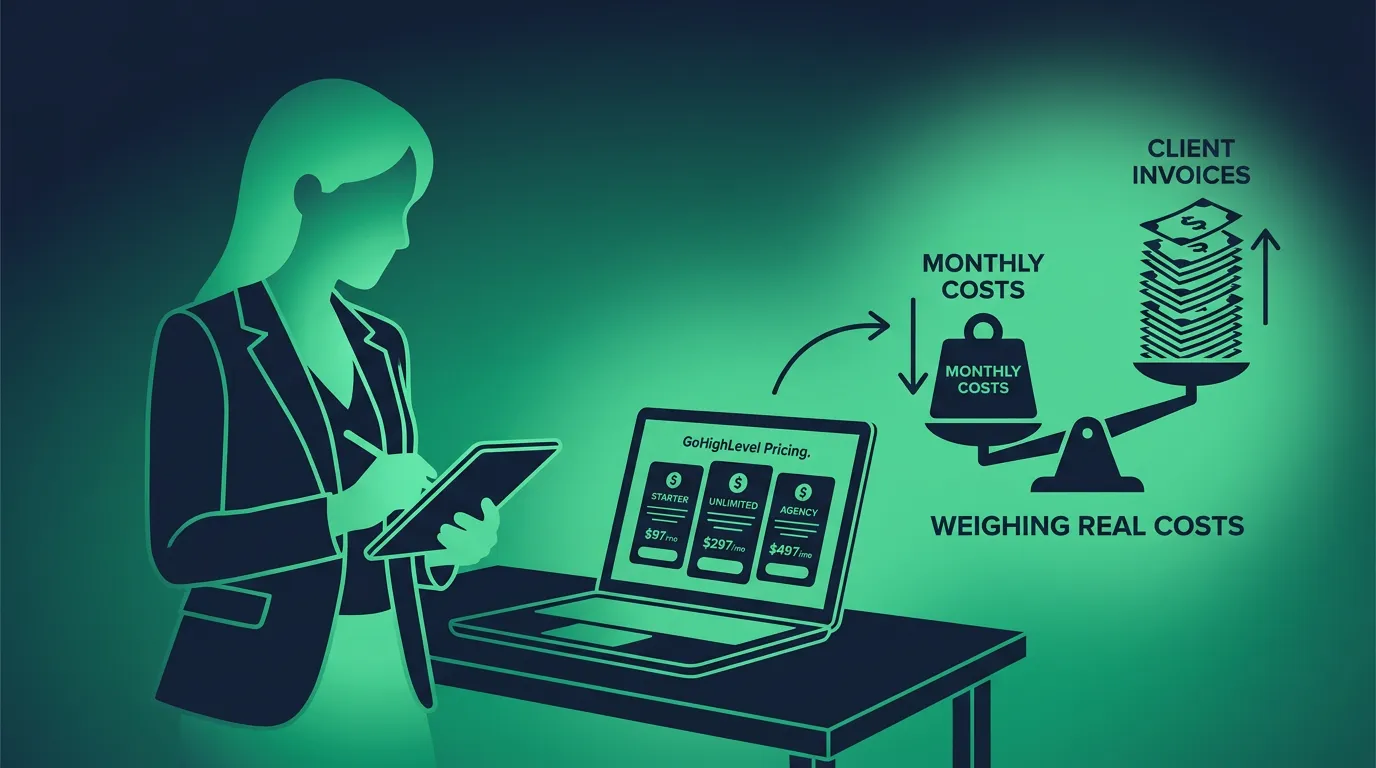
GoHighLevel’s Starter plan is $97/month ($970/year) and includes up to three sub-accounts with unlimited contacts and users. Unlimited ($297/month) is for agencies running many client accounts; a single plumbing company doesn’t need it. On top of the subscription you pay for usage: $0.00747 per SMS segment plus carrier fees, $0.0166 per outbound minute, $1.15/month per local number, and $0.675 per 1,000 emails. The HighLevel and LeadConnector mobile apps are free on all plans.
A dispatch platform adds its own cost. A three-tech shop on Jobber Connect pays $99 to $139 a month depending on billing, and on Housecall Pro Essentials $149 to $189. Run both and you’re paying roughly $200 to $290 a month before usage. That’s worth it when one recovered emergency call or one closed water heater quote a month covers the GoHighLevel bill. It isn’t worth it for a referral-only business with a handful of calls a week.
GoHighLevel’s 14-day free trial requires a card and charges automatically at the end, so build and test your missed-call workflow in the first week.
Choosing a CRM for your plumbing business
Start with the missed-call test. Call your own number after hours. If it rolls to voicemail and nobody checks it until morning, that gap alone justifies a front-end CRM.
Then count lead volume across every channel: phone, web forms, Google Business Profile messages and referrals. A shop with 15 leads a month, mostly repeat customers, can run on a dispatch tool’s built-in CRM. A shop with 40 or more leads from ads or search usually needs dedicated follow-up automation, because that’s where business growth shows up and where the right software can help your business most.
Finally, separate the two jobs on paper. List what happens before dispatch (capture, text back, nurture, book, remind) and after (route, complete, cost, invoice). Price GoHighLevel against the first list and a dispatch tool against the second, and let your business needs decide which you buy first. The goal is to grow your business with fewer missed calls, not to own the most software.
HVAC contractors and other home service contractors
The same split applies to HVAC contractors and any other home service business, and to service contractors generally. A no-heat call in January carries the same urgency as a burst pipe, and reviews drive the same local searches. Agencies that market several trades often build one missed-call, nurture and review pipeline as a GoHighLevel snapshot template and adapt it per client, which is why GoHighLevel shows up so often in home service marketing.
If you run construction or remodeling work too, the CRM for contractors breakdown covers longer sales cycles and project bids. For other service businesses, see the guides for real estate investors, consultants and professional services firms. If GoHighLevel looks like the right front end, GoHighLevel’s pricing tiers explain which plan a single shop needs, and the full GoHighLevel review covers the platform beyond plumbing. The best CRM software hub compares wider options.