Marketing campaign management software is a tool that lets a marketing team plan a campaign, launch it across marketing channels, and track its results in one place. For most small teams and agencies, the best campaign management software is an all-in-one platform where the campaign tools sit on top of the CRM, because the campaign can then use the contact data and automations you already have.
The category is wider than the name suggests. It runs from task boards that track who’s writing which email, to full marketing platforms that build the landing page, send the email campaign, text the lead and report the revenue. This guide explains what the software does, the features worth paying for, the main tools and what they cost, and how to choose.
What campaign management software does
A marketing campaign is one coordinated effort with a goal, a start date and an end date: a product launch, a seasonal promotion, a webinar push. Campaign management software helps marketing teams run that effort, and track marketing campaigns, from one system. You define the goal and budget, build the audience, schedule the email, SMS, social media and ad touches, and then see campaign performance by channel once it’s live.
That’s different from marketing automation, though the two overlap. Automation tools run repeatable workflows such as a lead nurture sequence or a missed-call text-back that keep running indefinitely. Campaign management wraps those workflows in a specific campaign with its own goal and reporting. Most modern platforms do both, because a campaign without automated follow-up loses leads.
UTM tags are the glue. A UTM campaign is just a label on a link so your analytics tools can group clicks and conversions under one campaign name. Tag every link in a campaign consistently and the software can tell you which channel drove the leads that closed, instead of only counting clicks.
Features to look for in a campaign management tool
A handful of features separate real campaign management tools from a task list with a “campaign” label.
Audience segmentation. You should be able to build a segment by behavior (opened the last three emails, visited the pricing page, missed an appointment), not only by static tags someone applied months ago.
Cross-channel orchestration. Email marketing, SMS marketing, social media marketing and paid ads should run as one sequence with shared rules. When a lead books a call from the email, the SMS reminder about the offer should stop.
Approvals and collaboration. If a client or manager signs off on copy before launch, that approval should happen in the tool, with a record. Teams that approve over Slack lose feedback and ship the wrong version.
Budget and ROI tracking. Opens and clicks aren’t the goal. The platform should show cost per lead and, ideally, revenue per campaign, which is the number that decides whether you run it again.
Campaign reporting. A dashboard that gives you visibility into campaign progress across every active campaign, with results stored against the contact record. When campaign data lives in the CRM, you can see the full path from first click to closed deal.
Integrations. Check that the tool connects to your ad accounts, payment processor and calendar natively, or through Zapier or Make, so you aren’t exporting CSVs between systems.
AI tools now show up in most of these platforms: drafting email copy, suggesting send times, summarizing campaign results. They’re useful for content creation. They don’t replace a clean segment and a tracked link.
The best campaign management tools for 2026
The marketing tools below cover the main types of buyers, from a suite of tools for small agencies to project boards for content teams. Prices are list prices checked in October 2026.
GoHighLevel: best for small teams and agencies
GoHighLevel is an all-in-one marketing platform. Every plan includes the CRM and pipelines, email and SMS marketing, social media management, an ad manager, funnel and landing page builders, booking calendars, and workflow automation with conditional branching. A campaign can capture a lead on a landing page, follow up by email and SMS, book the call and move the deal through the pipeline without leaving the platform.
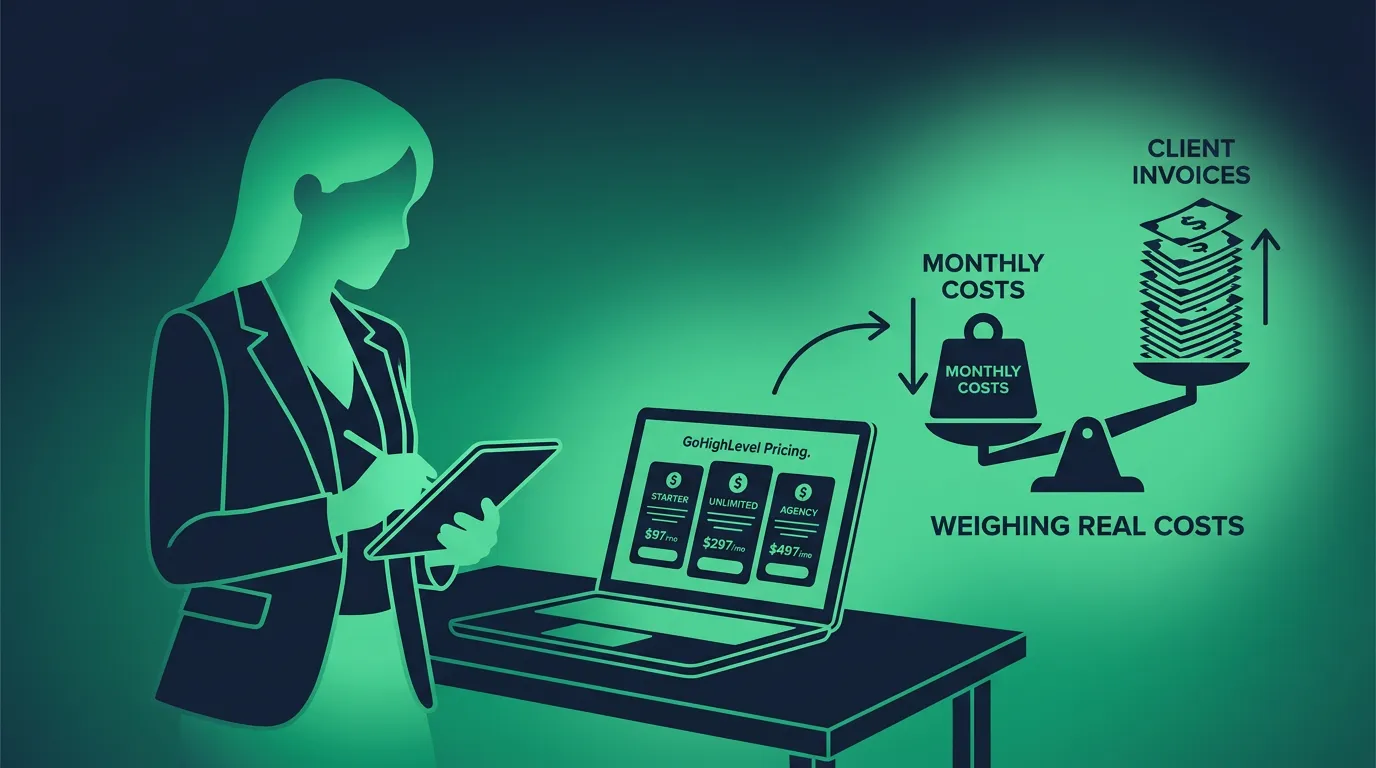
Pricing is flat: Starter is $97/mo for up to 3 sub-accounts, Unlimited is $297/mo, and contacts and users are unlimited on every plan. SMS, email sends and AI features are billed on usage on top of that. See our GoHighLevel pricing breakdown for the per-message rates.
The trade-offs: there’s a learning curve, and individual tools are less polished than best-in-class single-purpose products. Its email editor is more basic than ActiveCampaign’s, for example. Our GoHighLevel review covers where it falls short.
HubSpot Marketing Hub: best for teams already on HubSpot
HubSpot has a dedicated campaigns tool that groups emails, landing pages, social posts, ads and reports under one campaign. It requires Marketing Hub Professional or Enterprise. Professional costs $890/mo billed monthly or $800/mo billed annually, includes 3 seats and 2,000 marketing contacts, and carries a mandatory $3,000 onboarding fee. Enterprise is $3,600/mo with a $7,000 onboarding fee.
HubSpot’s free plan is a free CRM for up to 2 users, and the Starter tier costs $20 per seat per month ($15 billed annually). Neither includes the campaigns tool. Its reporting and attribution are excellent, and it’s the obvious choice for marketing and sales teams already standardized on it. For a small business, the jump from Starter to Professional is steep. We compare the two head to head in GoHighLevel vs HubSpot.
ActiveCampaign: best for email-led campaigns
ActiveCampaign is an email marketing platform with strong automation. Pricing starts at about $15/mo billed annually ($19 monthly) for 1,000 contacts on Starter, and rises with list size. Plus (from about $49/mo annually) adds landing pages and lead scoring, and Pro (from about $79/mo annually) adds conversion attribution. These figures come from 2026 third-party reviews, since ActiveCampaign’s own pricing page shows prices only after you choose a contact tier.
It’s a good fit if most of your campaign runs through email. A full sales CRM is a paid add-on, and SMS and ads take extra tools. See GoHighLevel vs ActiveCampaign for the detail.
Asana and other project management tools: best for coordination
Asana, monday.com and Trello are project management tools, and they show up on most lists of the best campaign management tools. They handle task management and team collaboration well: kanban boards, drag-and-drop timelines, campaign templates, approvals and due dates. If your problem is that nobody knows who owns which asset, a project management tool fixes it.
They don’t segment an audience, send an email, or tie a deal back to the campaign that produced it. Teams that start here usually add an email tool and a CRM, and then they’re back to juggling several logins.
Campaign management tools compared
| Tool | Type | Starting price | Campaign tools from | Best for |
|---|---|---|---|---|
| GoHighLevel | All-in-one CRM and marketing | $97/mo | Every plan | Small teams, agencies |
| HubSpot Marketing Hub | Marketing suite | Free CRM; Starter $20/seat | Professional, $800/mo annual | Teams already on HubSpot |
| ActiveCampaign | Email marketing and automation | ~$15/mo (1,000 contacts, annual) | Every plan (email-led) | Email-heavy campaigns |
| Asana / monday.com | Project management | Free plan available | Task tracking only | Coordinating campaign work |
Common campaign types and what each needs
Specific campaign types lean on different features, which is why a tool that’s great for one can be weak for another.
An email campaign (newsletter promotion, launch sequence, re-engagement) needs segmentation, A/B testing and automation that reacts to opens and clicks, so you can automate email marketing follow-ups instead of sending one blast. Tools for email marketing like ActiveCampaign are strongest here.
A social media marketing campaign needs a scheduler, a content calendar and approvals for posts across several networks. A social media management platform or the social planner inside an all-in-one tool covers it.
A paid ad campaign needs ad account connections, landing pages and attribution, so you can see cost per lead by ad set rather than platform-reported clicks.
A lead generation or local business campaign (missed-call text-back, review requests, appointment reminders) needs SMS, a booking calendar and a CRM pipeline in the same system. This is where GoHighLevel is strongest, and why digital marketing agencies serving local clients use it.
Content marketing campaigns (a guide, a webinar, a video series) need collaboration and asset tracking more than send logic, so content marketing teams often pair a project management tool with their marketing platform.
Benefits of using campaign management software
The main benefit is fewer dropped balls. When every touch in the entire campaign runs from one system, an offer change updates everywhere, follow-ups fire on time, and a lead who books from an email stops receiving promotional texts.
The second is honest reporting. Tracking campaign performance gets easier when the insights come from data the platform already holds (who received what, who converted, what it cost) rather than numbers stitched together from five exports. That’s what lets you cut a channel that isn’t working and move budget to one that is.
The third is time. Marketing teams spend less of the week copying contacts between tools and rebuilding the same workflow for each campaign. Most platforms let you clone campaign workflows, so the second launch takes a fraction of the first, which matters when you’re managing marketing campaigns for several clients at once.
Campaign management tools vs project management tools
The line blurs because both help you manage marketing campaigns. The difference is what each one touches.
A project management tool manages the work: briefs, assets, approvals, deadlines. Campaign management software manages the campaign itself: the audience, the sends, the channel timing and the results. Some teams genuinely need both, and a large marketing operations team often runs a project management tool for production plus a marketing platform for execution.
If you can only buy one, buy the one that runs the campaign. A missed deadline hurts. A campaign you can’t measure costs you every month after.
All-in-one platforms vs specialized campaign tools
Campaign management solutions come in two shapes.
Specialized campaign platforms (enterprise marketing suites and dedicated planning tools) fit large organizations running many campaigns across regions or product lines. Their strengths are multi-level approvals, budget rollups and executive dashboards. They usually sit next to a CRM and an email platform the company already owns.
All-in-one platforms put campaign management inside a broader CRM and marketing automation platform. GoHighLevel is the clearest example for small businesses and agencies. You pay one subscription instead of separate bills for a CRM, an email tool, an SMS tool and a social scheduler, and you don’t spend time keeping them in sync.
For a solo marketer, a small team or an agency, the all-in-one route usually wins on cost and setup. An enterprise team with an entrenched CRM and complex approval chains will outgrow it.
Choosing the right campaign management software
Four questions narrow the field quickly.
- How many channels does a typical campaign use? If it’s email plus one more, most tools work. Email, SMS, social and ads in one coordinated sequence narrows the list to platforms built for cross-channel campaigns.
- Should campaign data live in your CRM? If you want one contact record and one login, pick an all-in-one. If you’re keeping an existing CRM, pick a campaign tool that integrates with it cleanly.
- Who approves what before launch? A solo operator doesn’t need approval chains. A team with a client, a manager and a legal reviewer does.
- Will you resell the software to clients? Agencies running campaigns for many clients should check for white-label options. Our explainer on what white label means covers the basics, and the white label marketing software hub compares the platforms that allow it.
Ask for a trial and build one real campaign, segment through reporting, before committing. GoHighLevel offers a 14-day free trial with a card on file. HubSpot’s 14-day trial of Professional features needs no card.
How to manage a marketing campaign, from marketing plan to report
The workflow is roughly the same in any good tool.
Start with a marketing plan: one goal, one offer, one audience, one deadline. Build the segment in the CRM from real behavior. Create the marketing assets (landing page, emails, SMS, social posts, ads) and tag every link with the same UTM campaign name. Set up the automation so follow-ups fire on what the lead does, and stop the sequence when they convert. Launch, then check the campaign dashboard weekly for cost per lead and conversion rate by channel. When it ends, compare the result to the goal and decide whether to run it again.
The most common way this goes wrong is buying the software before mapping the process, then bending your marketing strategies to fit someone else’s defaults. The second is judging success by open rates. If the tool can’t trace a lead back to the campaign that produced it, the reporting isn’t doing its job.
Does it integrate with your existing systems?
Usually, but check the specific connections. GoHighLevel connects natively to Stripe, Google, Facebook and Instagram, Shopify and Zoom, and to almost everything else through Zapier or Make. HubSpot has a large app marketplace and a native Salesforce sync. ActiveCampaign integrates with most ecommerce and CRM tools.
The integration that matters most is the CRM. If campaign data and contact data live in separate systems, someone ends up reconciling them by hand, and attribution breaks. For agencies asking which CRM fits best, our guide to the best CRM for agencies compares the options.
Related terms worth knowing
Vendors use several labels for overlapping products. A CRM (customer relationship management) system is the record of contacts and deals; our guide to what CRM stands for explains the term. Sales and marketing software is the broader category covering CRMs, campaign tools and everything else used to generate and close leads, covered in our guide to sales and marketing software. Marketing planning software usually means calendars and budget planning before launch, while campaign management software covers execution and measurement.
Where to start
Most teams researching marketing campaign management software need a tool that fits how their marketing efforts actually run and connects to the contact data they already have. For solo operators, small teams and agencies, that points to an all-in-one platform like GoHighLevel. For marketing teams already running HubSpot, Marketing Hub Professional is the natural step, if the budget fits.